
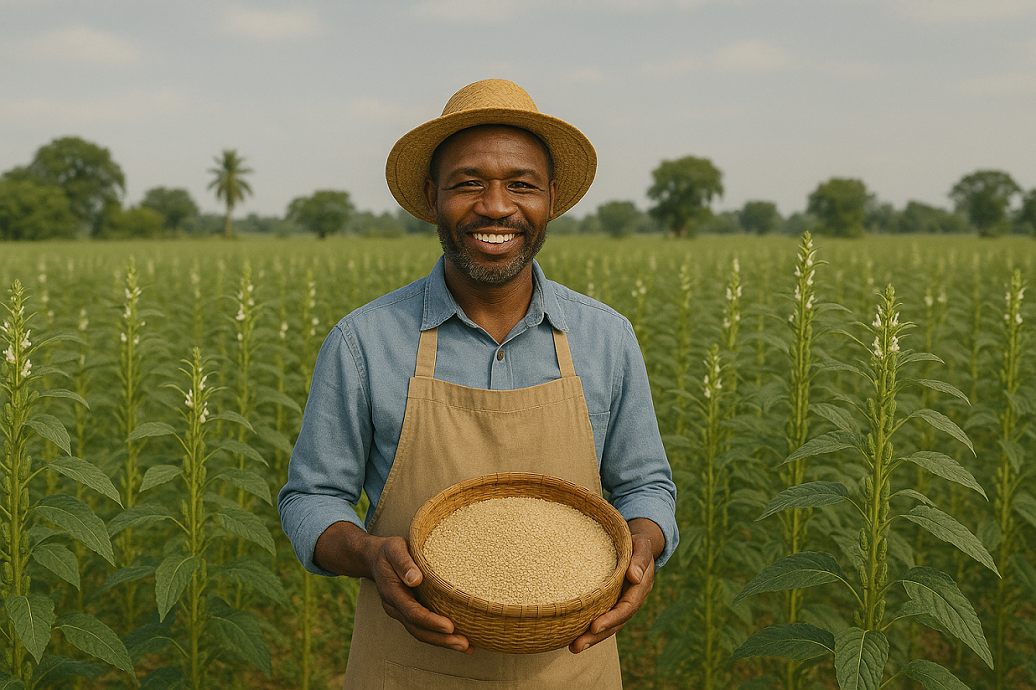
Growing Gold: The Rise of Sesame Farming in Africa
In recent years, sesame has emerged as one of Africa’s most valuable and promising crops. Known as the “queen of oilseeds,” sesame is both drought-resistant and high in oil content, making it a favorite among farmers across the continent. From Ethiopia to Nigeria, smallholder farmers are cultivating sesame not only for domestic use but also for the lucrative export market.
Why Sesame?
Sesame (Sesamum indicum) is prized for its versatility. Its seeds are used in food, oils, cosmetics, and pharmaceuticals. Unlike many crops, sesame thrives in harsh, dry climates and poor soils—conditions that are increasingly common across sub-Saharan Africa. Its low water requirement and relatively short growing season make it a strategic crop for areas facing climate variability.
Major Producers in Africa
Africa accounts for over 50% of global sesame production. The key producers include:
-
Sudan – One of the largest exporters, especially to China and the Middle East.
-
Ethiopia – Known for high-quality sesame, particularly prized by the Japanese market.
-
Nigeria – A rapidly growing sector with strong demand from Asia and Europe.
-
Tanzania, Uganda, and Burkina Faso – Smaller producers with increasing export potential.
Opportunities for Farmers
-
High Market Demand: Sesame has seen a sharp increase in demand worldwide due to its health benefits and use in vegan, gluten-free, and plant-based products.
-
Export Value: With rising prices on international markets, sesame has become a key source of income for many rural African communities.
-
Organic Advantage: Many African farmers grow sesame using traditional, chemical-free methods, making their crops well-suited to meet the organic certification standards of premium markets.
Challenges to Overcome
Despite its promise, sesame farming in Africa faces several hurdles:
-
Lack of mechanization: Most sesame is grown and harvested manually, which limits scalability.
-
Market access: Poor infrastructure and lack of organized cooperatives can make it difficult for farmers to reach high-value markets.
-
Pests and diseases: Though generally hardy, sesame is vulnerable to bacterial blight and pest infestations without proper management.
A Sustainable Path Forward
Organizations and governments are investing in sesame as a climate-smart crop. Training programs, better seed varieties, and support for organic certification are helping African farmers boost yields and access international markets.
Sesame farming not only provides economic opportunity—it also offers a sustainable farming solution tailored to Africa’s unique environment. As global consumers look for healthier, ethically sourced foods, sesame from Africa is poised to meet the moment.
Conclusion
Sesame is more than a seed—it's a symbol of resilience and potential. With continued investment in training, infrastructure, and organic practices, Africa can cement its place as a leader in sesame production, bringing prosperity to farmers and healthy food to tables around the world.
